2023 Administrative Law Conference
11/30/2023
12/01/2023
About
Agenda
30
Access to Justice in Administrative Adjudication
Start
9:30 AM
End
11:00 AM
 Allie Yang-Green
 Jeremy Graboyes
 Judge Lorraine Lee
Judicial Remedies in Administrative Law
Start
9:30 AM
End
11:00 AM
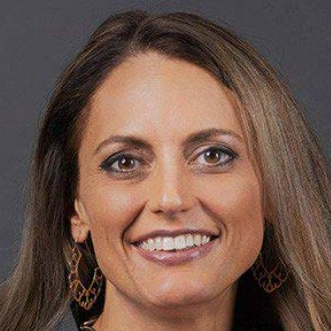 Jennifer Mascott
OIRA Leaders on Biden Administration Regulatory Policy
Start
9:30 AM
End
11:00 AM
 Boris Bershteyn
 Bridget C.E. Dooling
 K. Sabeel Rahman
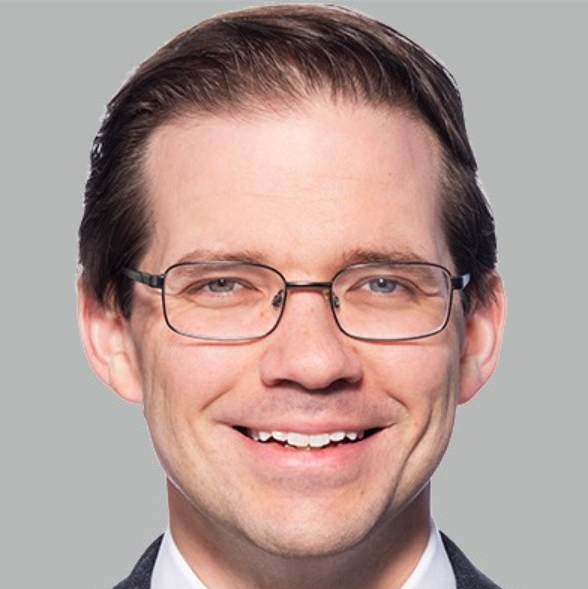 Paul J. Ray
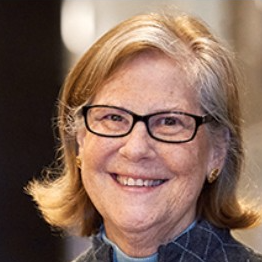 Sally Katzen
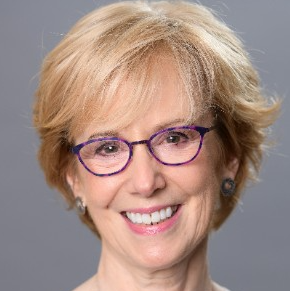 Susan E. Dudley
Rulemaking 101
Start
9:30 AM
End
11:00 AM
Constitutional Challenges to Agency Adjudication Before the Supreme Court
Start
11:30 AM
End
1:00 PM
Jennifer Mascott
 Matthew Lee Wiener
FOIA Challenges: Administration and Litigation
Start
11:30 AM
End
1:00 PM
Judicial Review 101
Start
11:30 AM
End
1:00 PM
 Boyd Garriott
Modernizing Regulatory Review
Start
11:30 AM
End
1:00 PM
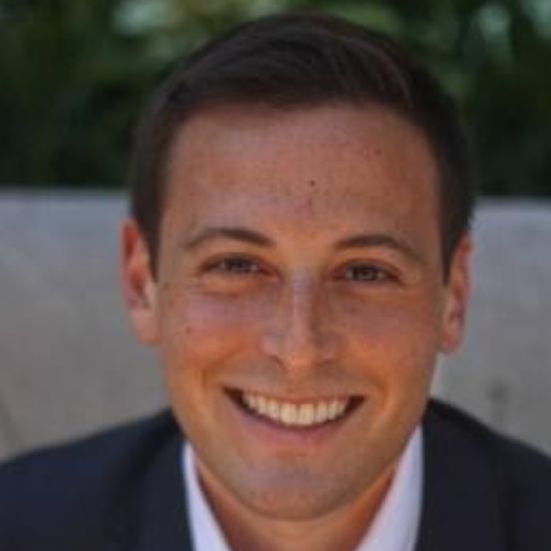 Alex Hertel-Fernandez
Bridget C.E. Dooling
Alex Hertel-Fernandez
Bridget C.E. Dooling
 Jack Lienke
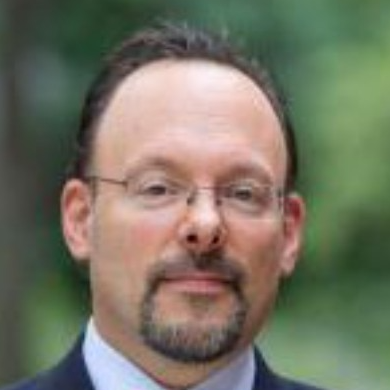 Jonathan Adler
Reflections of a D.C. Circuit Judge
Start
1:15 PM
End
1:45 PM
 Adam White
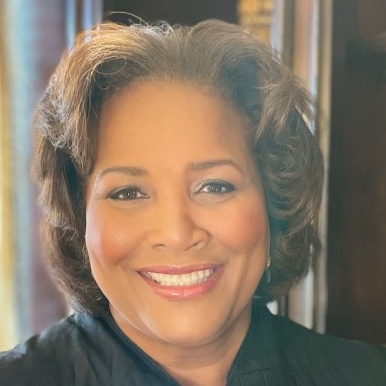 Judge Michelle Childs
Into the Unknown: The Regulation of AI & Emerging Technologies
Start
2:00 PM
End
3:30 PM
 Amba Kak
 Connor Dunlop
 Lee Tiedrich
 Zachary Arnold
Meeting the Public Where the Public Is At: A Path to Better Regulation
Start
2:00 PM
End
3:30 PM
 Anthony P. Campau
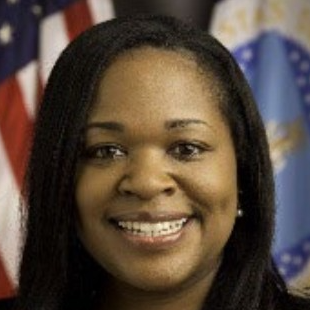 J. Latrice Hill
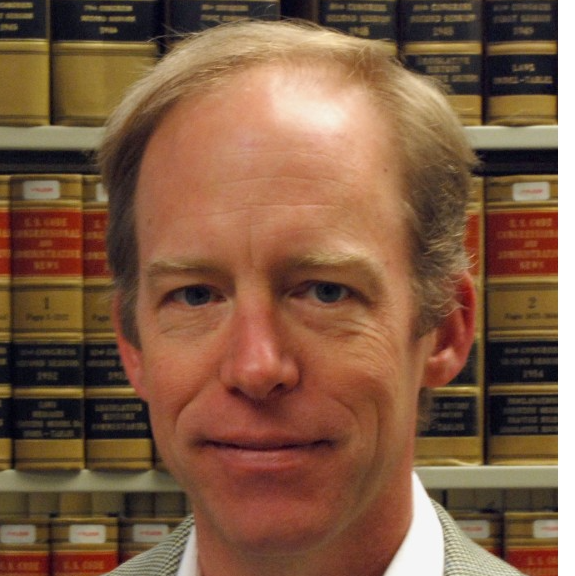 Richard Murphy
 Sam Berger
Paperwork Reduction Act 101+
Start
2:00 PM
End
3:30 PM
The Administrative Law of Federal Spending
Start
2:00 PM
End
3:30 PM
Administrative Records: Basic Requirements and Future Issues 101
Start
4:00 PM
End
5:30 PM
 Dennis Fan
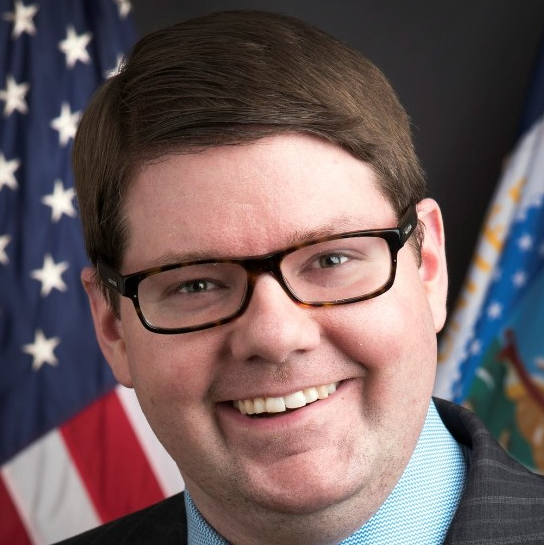 Honorable Stephen Alexander Vaden
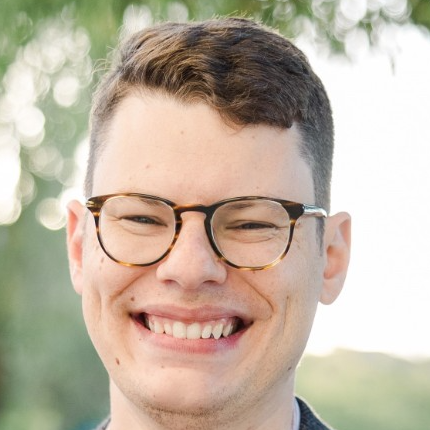 Steven A. Platt
Government AI Uses: Policy and Practice
Start
4:00 PM
End
5:30 PM
Major Questions, Chevron Deference, and the Future of Statutory Interpretation
Start
4:00 PM
End
5:30 PM
 Alisa Klein
 Elizabeth Slattery
 Honorable Ronald Cass
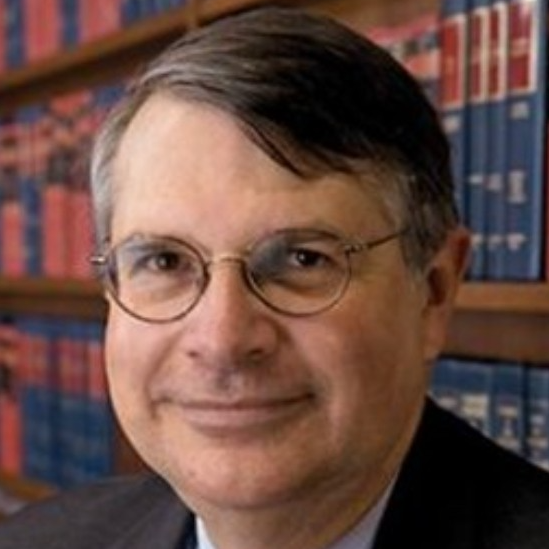 Thomas Merrill
Regulating Emerging Technologies in Multimodal Transportation & Critical Infrastructure
Start
4:00 PM
End
5:30 PM
 Allison Fultz
 Timothy Tenne
01
Developments in Administrative Law Part I
Start
9:30 AM
End
11:15 AM
 Bethany Davis Noll
Bridget C.E. Dooling
Bethany Davis Noll
Bridget C.E. Dooling
 Daniel Walters
Jeremy Graboyes
Matthew Lee Wiener
Daniel Walters
Jeremy Graboyes
Matthew Lee Wiener
Developments in Administrative Law Part II
Start
11:45 AM
End
1:30 PM
Daniel Walters
Richard Murphy
 William Funk
Ethical Challenges of Leaving Private Practice to Work for the Government
Start
2:00 PM
End
3:30 PM
From Complex to CX: Reducing Administrative Burdens Through (or Despite) Laws and Policies Governing Paperwork Reduction, Data Sharing, and Agency Organization
Start
2:00 PM
End
3:30 PM
 Amy Widman
 Donald Moynihan
 Matthew Gluth
 Pamela Herd
 Robyn Smith
Reexamining Agency Policymaking: Agency Discretion, The Major Questions Doctrine, and “Ordinary Questions.”
Start
2:00 PM
End
3:30 PM
 Anita Krishnakumar
 Daniel Deacon
 Jonathan Siegel
Leaving Government Employment: Ethics Issues for Lawyers
Start
4:00 PM
End
5:30 PM
New Frontiers in Agency Guidance and Auer Deference
Start
4:00 PM
End
5:30 PM
 Nicholas Parrillo
Sally Katzen
Nicholas Parrillo
Sally Katzen
Operation: Public Engagement
Start
4:00 PM
End
5:30 PM
 Chad Whiteman
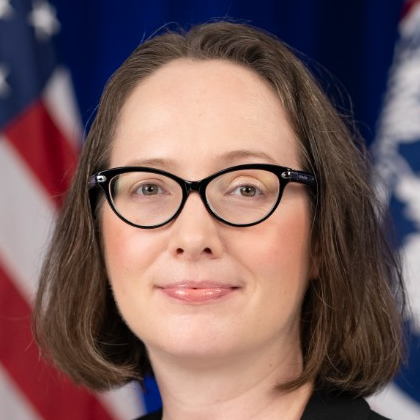 Kate Syfert
 Michael Sant’Ambrogio
Sam Berger
Michael Sant’Ambrogio
Sam Berger
Speakers
Abioye Oyewole
Assistant General Counsel, Division of Information Access, U.S. Consumer Product Safety Commission
Adam White
Chair, Section of Administrative Law & Regulatory Practice
Adam White is co-director of George Mason University’s Gray Center for the Study of the Administrative State and a senior fellow at the American Enterprise Institute.He previously served on the Section’s Council and he co-chaired the Judicial Review Committee. He is a public member of the Administrative Conference of the United States, and last year he was appointed to the Presidential Commission on the Supreme Court of the United States. He often testifies before Congress on administrative law and regulatory policy. Previously he practiced constitutional and administrative law, with special focus on energy and financial regulation, with Baker Botts LLP and Boyden Gray & Associates PLLC. (As an associate at Baker Botts, he helped to curate, write, and produce the D.C. Circuit Historical Society’s standing exhibit on the history of the federal courts in Washington.) After graduating from the University of Iowa and the Harvard Law School, he clerked for Judge David Sentelle of the U.S. Court of Appeals for the D.C. Circuit.
Alex Hertel-Fernandez
Associate Professor of International and Public Affairs, Columbia University
Alexander Hertel-Fernandez is Associate Professor of International and Public Affairs, School International and Public Affairs, Columbia University. One recently published book by Hertel-Fernandez, Politics at Work (Oxford University Press), examines how American businesses are increasingly recruiting their workers into politics and how that practice is shaping American politics and policy. With Theda Skocpol, he is working on another book, currently under contract with the University of Chicago Press, which examines the rise of the Koch political network and its implications for the Republican Party and the American political economy. Hertel-Fernandez received his BA in political science from Northwestern University and his A.M. and Ph.D. in government and social policy from Harvard University.
Alisa Klein
Senior Level Appellate Counsel for Administrative Law and Litigation, Civil Division, U.S. Department of Justice
Alisa Klein is the Senior Level Appellate Counsel for Administrative Law and Litigation at the U.S. Department of Justice, Civil Division. Alisa joined the Civil Division’s Appellate Staff in 1995 after clerking for Justice Ruth Bader Ginsburg and Judge Louis H. Pollak. The views expressed at the conference are her own and do not necessarily reflect the position of the Department of Justice. In August 2024, Alisa will leave DOJ and join the full-time faculty of a new law school that was recently opened by Wilmington University to increase access to affordable legal education and diversity in the bar.
Allie Yang-Green
Executive Director, Legal Aid Interagency Roundtable, U.S. Department of Justice, Office for Access to Justice
Allie Yang-Green leads the White House Legal Aid Interagency Roundtable (LAIR), a 28-federal agency collaboration to increase access to justice among federal programs, and works at the U.S. Department of Justice, Office for Access to Justice (ATJ). This work builds on her previous tenure at ATJ from 2015 to 2018, managing various aspects of LAIR and civil justice policy initiatives. Allie has also worked as a legal aid attorney at Legal Services of Northern Virginia helping low-income clients with housing, consumer, and family law issues, litigated civil cases as a DOJ trial attorney, and managed public interest legal fellowship programs at Equal Justice Works, collaborating with legal aid organizations across the country. Allie is a graduate of Yale University and the University of Virginia School of Law.
Allison Fultz
Chief Counsel , Federal Railroad Administration
Allison Ishihara Fultz is Chief Counsel of the Federal Railroad Administration (FRA). She is the principal legal advisor to the agency and leads FRA’s staff of legal professionals. Allison joined FRA from private practice, where she focused her work on transactional and regulatory matters related to transportation infrastructure projects. She represented public transportation providers, a transit safety oversight agency, State departments of transportation and regional transportation bodies, local governments, and private entities nationwide before numerous federal agencies and state and federal courts. She counseled clients extensively on the acquisition and abandonment of railroad rights-of-way, shared use of rail corridors by freight and passenger operators, rails-to-trails proposals, regulation and contracting for inter-city passenger rail service, infrastructure project development, historic preservation, environmental reporting, agency rulemaking, project procurement, and drafting and negotiation of contracts for railroad construction, operations, and maintenance services. Allison has also authored studies and served as a committee member for the Transportation Research Board. She served on the Montgomery County, Maryland, Board of Appeals, including as its Chairman, for eight years, deciding on petitions for relief under the County’s zoning ordinance on numerous land use and administrative matters. Prior to entering the practice of law, Allison was a registered architect and designed and directed construction projects and feasibility studies for projects in the United States and Canada. Allison received her JD from the American University Washington College of Law, and her AB and Master of Architecture degrees from Princeton University.
Amba Kak
Executive Director at AI Now and Senior Research Scientist , Cybersecurity and Privacy Institute at Northeastern University
Amba Kak is a globally recognized technology policy strategist and researcher with over a decade of transnational experience in roles across government, academia, and the nonprofit sector. Amba is currently the Executive Director at AI Now and Senior Research Scientist at the Cybersecurity and Privacy Institute at Northeastern University. She previously served as a Senior Advisor on AI at the Federal Trade Commission where she advised the regulatory agency on emerging technologies. Prior to AI Now, Amba was Global Policy Advisor at Mozilla, where she helped develop Mozilla’s policy positions, and supported a multi-pronged campaign for strong data protection law in India and Kenya. She also serves on the Board of Directors for the Signal Foundation and the Program Committee for the Board of Directors for the Mozilla Foundation.Amba has been the recipient of the Google Policy Fellowship and the Mozilla Tech Policy Fellowship. She has published widely across academic journals and popular outlets, and her work has been featured in Nature, MIT Tech Review, Wired, among others. Trained as a lawyer, Amba received her BA LLB (Hons) from the National University of Juridical Sciences in India. She has a Masters in Law (BCL) and an MSc in the Social Science of the Internet at the University of Oxford, which she attended as a Rhodes Scholar.
Amy (Bennett) Nafziger
Director of Communication, Privacy Office, Department of Homeland Security
Amy Widman
Professor of Law, Rutgers Law School
Amy Widman is a professor of law at Rutgers Law School where she teaches administrative law and other courses. Previously she was an associate professor of law at Northern Illinois University College of Law and deputy director at the National Center for Access to Justice at Fordham Law School. Her research focuses on access to justice in state and federal administrative law.
Amy Wildermuth
Visiting Professor of Law, Moritz College of Law, Ohio State University
Amy J. Wildermuth (she/her) is currently a Visiting Professor of Law at the Moritz College of Law at the Ohio State University. She has been the dean and a professor of law at the University of Pittsburgh, and the associate vice president for faculty, the first-ever chief sustainability officer, and a professor of law at the University of Utah. Amy clerked for Justice John Paul Stevens of the Supreme Court during the October Term 2002, Judge Guido Calabresi of the Second Circuit, and Judge Harry T. Edwards of the D.C. Circuit. She earned a J.D. and an M.S. in Environmental Engineering from the University of Illinois, and her B.S. in Engineering and Public Policy and an A.B. in History from Washington University in St. Louis. Amy currently serves as Vice President of the ABA’s Section of Administrative Law and Regulatory Practice.
Andrew Emery
President, The Regulatory Group Inc
Andrew Emery is president of The Regulatory Group Inc. (TRG) and executive chair of DocketScope Inc. Since 1996, Mr. Emery has worked with numerous federal agencies on regulatory projects and supported agency advisory committees to address complex policy issues. After decades of experience supporting agency rulemakings, Mr. Emery led TRG to develop the comments analysis platform DocketScope™ and in 2022 he founded DocketScope Inc. Mr. Emery is also the primary instructor of more than 10 classes offered by TRG on the regulatory process, which draw attendees from almost every federal regulatory agency, as well as from state and foreign governments and the private sector. Mr. Emery has served in various capacities in the American Bar Association’s Section of Administrative Law and Regulatory Practice. Mr. Emery has been presenter and organizer of the Rulemaking 101 sessions at the spring and fall conferences since 2011 and is a member of the section’s Regulatory Policy, Rulemaking, E-Rulemaking, Sponsorship, and Fundraising committees. He has co-chaired the section’s Fall Conference from 2014-2020, served on the Governing Council from 2017-2019, served on the section’s Nominating Committee in 2017, served as the section’s liaison to the Administrative Conference of the United States (ACUS) in 2017, and received the Chair’s Award for Outstanding Volunteer Service in 2017. Mr. Emery was Chair of the section for 2021-2022 and currently serves as the Last Retiring Chair of the section. Since 2017, Mr. Emery has also served as a special counsel to ACUS and is a member of ACUS’s Rulemaking Committee. Mr. Emery is a graduate of Kenyon College and American University’s Washington College of Law.
Andrew Free
Attorney, Al Otro Lado
Andrew Mergen
Faculty Director, Emmett Visiting Assistant Clinical Professor of Law, Emmett Environmental Law & Policy Clinic | Harvard Law School
Anita Krishnakumar
Agnes Williams Sesquicentennial Professor of Legislation & Anne Fleming Research Professor, Georgetown University Law Center
Professor Anita Krishnakumar is the Agnes Williams Sesquicentennial Professor of Legislation at Georgetown University Law Center, where she teaches Legislation and Statutory Interpretation, Administrative Law, Trusts and Estates, and a Colloquium on Advanced Topics in Legislation. Professor Krishnakumar is an expert on Congress and statutory interpretation. Her scholarship focuses on statutory interpretation and the legislative process, including the congressional budget process, lobbying regulations, and interpretive trends in the Supreme Court’s statutory jurisprudence. Her articles have appeared in several leading journals, including the Harvard Law Review, the Stanford Law Review, the University of Chicago Law Review, the Yale Law Journal, the New York University Law Review, the Virginia Law Review, the Duke Law Journal, and the Harvard Journal on Legislation. Professor Krishnakumar is a past Chair and Executive Board member of the Legislation Section of the Association of American Law Schools, the current editor of the SSRN eJournal on Legislation and Statutory Interpretation, and a contributor to Rick Hasen’s Election Law Blog, http://electionlawblog.org/. She holds an A.B. with distinction from Stanford University and a J.D. from Yale Law School, where she was Chair of the Notes Committee for the Yale Law Journal, a Senior Editor on the Yale Law and Policy Review, and a Coker Teaching Fellow in Constitutional Law.
Anthony P. Campau
Principal, Clark Hill Public Strategies
Anthony P. Campau is an attorney at Clark Hill PLC, a principal at Clark Hill Public Strategies, and the director of the Regulatory Modernization and Alignment Initiative at the Economic Policy Innovation Center in Washington, D.C. Campau previously served as chief of staff and counselor for the Office of Information and Regulatory Affairs (OIRA) within the U.S. Office of Management and Budget (OMB), was a member of the beachhead team at OIRA, and was a core member of the regulatory reform team on the 2016 presidential transition team. In those roles he helped to develop and implement significant regulatory policy and process reforms across the U.S. Federal Government. He clerked for Judge Neomi Rao of the U.S. Court of Appeals for the D.C. Circuit and was as a regulatory fellow at the Roe Institute for Economic Policy Studies at The Heritage Foundation. He has testified before Congress on regulatory issues, represented the U.S. Federal Government in numerous international regulatory cooperation initiatives, published and spoken widely on regulatory topics, and contributed to collaborative works like the Mandate for Leadership. Campau earned a J.D. and an LL.M. in Securities and Financial Regulation from Georgetown University Law Center and a B.A. in History from Southeastern University.
Aram A. Gavoor
Assocociate Dean for Academic Affairs and Professor by courtesy at the Trachtenberg School of Public Policy and Public Administration. , George Washington University Law School
Aram A. Gavoor is Assoc. Dean for Academic Affairs at Geo. Wash. Law and Professor by courtesy at the Trachtenberg School of Public Policy and Public Administration.
Bernard Bell
Professor of Law and Herbert Hannoch Scholar, Rutgers Law School
Bethany Davis Noll
Executive Director of the State Energy & Environmental Impact Center and Adjunct Professor of Law, New York University School of Law
Bethany Davis Noll is Executive Director of the State Energy & Environmental Impact Center at NYU School of Law and an adjunct professor at NYU Law. Prior to joining the Center, she was Litigation Director at the Institute for Policy Integrity. She has also served as an Assistant Solicitor General in the New York State Attorney General’s Office, where she filed briefs in major environmental cases in the Supreme Court and earned the Louis J. Lefkowitz Memorial Award for her work. Prior to government service, Bethany was an associate at Debevoise & Plimpton LLP and served as a clerk for the Honorable Chester J. Straub in the Second Circuit Court of Appeals and for the Honorable Shira A. Scheindlin in the District Court for the Southern District of New York. She was co-chair of the Environmental Law Committee of the New York City Bar Association from 2020 to 2023. Bethany received a J.D. with distinction from Stanford Law School and a B.A., magna cum laude, from Barnard College.
Boris Bershteyn
Partner, Skadden, Arps, Slate, Meagher & Flom LLP
Boris Bershteyn is Partner at Skadden, Arps, Slate, Meagher & Flom LLP and Affiliates. From 2009 to 2013, Mr. Bershteyn held a number of senior legal and regulatory positions at the White House and its Office of Management and Budget (OMB), including acting administrator of the Office of Information and Regulatory Affairs (OIRA) and general counsel of OMB. Mr. Bershteyn previously served as OMB’s deputy general counsel. From 2010 to 2011, Mr. Bershteyn was a special assistant to the president and associate White House counsel, advising senior administration officials on legal aspects of regulatory, economic, health and environmental policy. In 2019, Mr. Bershteyn was named as a senior fellow of the Administrative Conference of the United States (ACUS), an independent federal agency charged with improving the federal regulatory and administrative process, after having served as a public member since August 2013. Additionally, from 2011 to 2013, Mr. Bershteyn served on ACUS’ 10-member governing council, to which he was appointed by President Obama. Earlier in his career, Mr. Bershteyn served as a law clerk to Justice David H. Souter on the U.S. Supreme Court and Judge José A. Cabranes on the U.S. Court of Appeals for the Second Circuit. He also is a recipient of the Paul and Daisy Soros Fellowship for New Americans. Mr. Bershteyn also serves as the chair of the advisory board of the Institute for Policy Integrity at New York University Law School, as a board member of PeerForward and Volunteers of Legal Service, as a member of The American Law Institute and as a trustee of the U.S. Supreme Court Historical Society.
Boyd Garriott
Associate, Wiley Rein LLP
Boyd Garriott is an associate at Wiley Rein LLP in the firm’s Issues and Appeals group. He represents clients in court and before federal agencies on issues of administrative law and statutory interpretation. He clerked on the U.S. District Court for the District of Columbia and is a graduate of Harvard Law School.
Brian Stansbury
Chief Counsel, Federal Motor Carrier Safety Administration
Bridget C.E. Dooling
Assistant Professor of Law, The Ohio State University
Bridget C.E. Dooling is Assistant Professor of Law at The Ohio State University. Professor Dooling teaches courses on legislation and regulation, administrative law and other regulatory topics. She serves on the Council of the American Bar Association’s Section of Administrative Law and Regulatory Practice and as a Senior Fellow at the Administrative Conference of the United States (ACUS). Prior to joining the faculty at Ohio State, Dooling was a research professor with the George Washington University Regulatory Studies Center and a professor of law (by courtesy) at GW Law. Before that, Professor Dooling spent over 10 years in the federal government as a deputy chief, senior policy analyst and attorney for the Office of Information and Regulatory Affairs at the U.S. Office of Management and Budget. She also served on Biden-Harris Presidential Transition Team as a member of the agency review teams for the Office of Management and Budget and the National Archives and Records Administration. Dooling is active with the Food & Drug Law Institute, currently serving on the editorial board of the Food & Drug Law Journal. She is a regular contributor to the Yale Journal on Regulation’s Notice & Comment blog and the Brookings Institute’s Series on Regulatory Process and Perspective.
Chad Whiteman
Vice President, Environment and Regulatory Affairs , U.S. Chamber Litigation Center
Chad S. Whiteman is vice president for environment and regulatory affairs at the U.S. Chamber of Commerce’s Global Energy Institute. Whiteman has more than two decades of experience working on energy and environmental policy, including developing and implementing Clean Air Act policies at the U.S. Environmental Protection Agency as well as leading executive branch review of top Administration regulatory policies for the White House. Before joining the Chamber, Whiteman was deputy chief of the Natural Resources and Environment Branch in the White House Office of Information and Regulatory Affairs. There, he provided expert input on the prioritization of agency regulatory and deregulatory actions for White House officials across multiple administrations. Earlier in his career, Whiteman was deputy director of the Institute of Clean Air Companies, the U.S. air pollution control technology association and worked at the U.S. Environmental Protection Agency developing and implementing power plant market-based cap-and-trade programs. Whiteman has an M.S. and a B.S. in civil engineering both from West Virginia University.
Charlie McKiver
Assistant General Counsel for Appropriations Law, Government Accountability Office
Christopher J. Walker
Professor of Law, University of Michigan
Claire Noakes
Special Counsel, Securities and Exchange Commission
Connor Dunlop
European Public Policy Lead, Ada Lovelace Institute
Connor is the European Public Policy Lead at the Ada Lovelace Institute. Connor is based in Brussels, and is responsible for leading and delivering Ada’s influencing and engagement strategy on the governance and regulation of AI in Europe. Prior to joining Ada, Connor worked in EU public affairs, where he led his team’s work on the EU’s AI Act and AI Liability Directive, while also working more broadly on EU data legislation. Besides this, Connor has worked in an international organisation, a think tank, and a consultancy in his home city, Belfast.
Daniel Cohen
Assistant General Counsel for Regulation, U.S. Department of Transportation
Daniel Cohen is the Assistant General Counsel for Regulation at the Department of Transportation. He is a member of the Senior Executive Service (SES) overseeing an office responsible for reviewing and coordinating the clearance of the Department’s rulemaking documents to ensure they are consistent with all legal requirements and Administration policy governing the rulemaking process, including the Administrative Procedure Act, Regulatory Flexibility Act, Federal Advisory Committee Act, Paperwork Reduction Act, Unfunded Mandates Reform Act, Small Business Regulatory Enforcement Fairness Act, and Executive Orders 12866. The office also formulates Department-wide regulatory policies and procedures; acts as liaison with the Office of Management and Budget and other federal agencies concerning. Departmental regulatory matters; and develops and implements regulatory initiatives and innovative rulemaking techniques. Previously, Mr. Cohen was Assistant General Counsel for Legislation, Regulation and Energy Efficiency at the Department of Energy (DOE), where he was also a member of the SES, managing an office of 18 attorneys. His former office is counsel to the DOE’s Office of Energy Efficiency and Renewable Energy. Additionally, the office provides legal counsel and rulemaking support to programs throughout DOE on administrative requirements for developing DOE rules, directives, and other generally applicable policies, and on legislative matters throughout the Department. Prior to joining the Energy Department, Mr. Cohen was appointed the first-ever Chief Counsel for Regulation in the General Counsel’s Office at the Department of Commerce. In this capacity, he oversaw the Office’s Regulatory Division, which is responsible for legal review of all regulatory actions of the Department. The division is also responsible for developing and implementing the Department’s regulatory policy. Mr. Cohen has authored several law review articles on Federal agency rulemaking, including Congressional Review of Agency Regulations. Additionally, he has been invited to speak on rulemaking procedure to a variety of groups in the United Sates, as well as to lawyers and government officials in countries such as Moldova, Morocco, and China. He has served as Chair of the Rulemaking Committee, Budget Officer and as a Council Member of the American Bar Association’s Section of Administrative Law and Regulatory Practice (Section). He is currently the Section’s Secretary. The Section has honored Mr. Cohen with the Mary C. Lawton Award for Outstanding Government Service. Mr. Cohen is a member of the Administrative Conference of the United States. Finally, Mr. Cohen has been an adjunct professor at the American University, Washington College of Law, in Washington, D.C, where he taught a course in Federal Regulatory Process.
Daniel Deacon
Assistant Professor of Law, University of Michigan Law School
Daniel Deacon is an assistant professor of law at the University of Michigan Law School. He has written about a broad range of topics, including the Supreme Court's recent major questions cases, agencies' obligation to respond to alternatives to their chosen course of action, and agency regulation of arbitration agreements. His work has appeared in journals such as the Yale Law Journal, Columbia Law Review, Michigan Law Review, Virginia Law Review, and Administrative Law Review. Prior to entering academia, Deacon was in private practice, where he handled matters involving telecommunications and Internet regulation, among other areas. He has experience representing clients before the Federal Communications Commission and at all three levels of the federal judiciary. Immediately after law school Deacon clerked for The Hon. A. Raymond Randolph of the US Court of Appeals for the District of Columbia Circuit.
Daniel Ho
William Benjamin Scott and Luna M. Scott Professor of Law; Professor of Political Science Science; Professor of Computer Science (by courtesy); Senior Fellow, Stanford Institute for Economic and Policy Research; Senior Fellow, Stanford Institute for Human
Daniel E. Ho is the William Benjamin Scott and Luna M. Scott Professor of Law, Professor of Political Science, Professor of Computer Science (by courtesy), Senior Fellow at the Stanford Institute for Economic Policy Research, and Director of the Regulation, Evaluation, and Governance Lab (RegLab).Ho served as Associate Director of the Stanford Institute for Human-Centered Artificial Intelligence and currently serves on the National Artificial Intelligence Advisory Commission (NAIAC), advising the White House on AI policy, as Senior Advisor on Responsible AI at the U.S. Department of Labor, on the Committee on National Statistics (CNSTAT) of the National Academies of Science, Engineering, and Medicine, as a Public Member of the Administrative Conference of the United States (ACUS), and as Special Advisor to the ABA Task Force on Law and Artificial Intelligence. His scholarship focuses on administrative law, regulatory policy, and antidiscrimination law.
Daniel Walters
Associate Professor of Law, Texas A&M University School of Law
Daniel E. Walters is an Associate Professor of Law at the Texas A&M University School of Law. Prior to joining the Texas, A&M faculty, he was an Assistant Professor of Law at Penn State Law, and before that a Regulation Fellow at the University of Pennsylvania Carey School of Law. He earned a JD from the University of Michigan Law School and a PhD in political science from the University of Wisconsin-Madison. He clerked for the Honorable M. Margaret McKeown on the U.S. Court of Appeals for the Ninth Circuit. He is also admitted to practice law (but inactive) in Illinois. Professor Walters writes about administrative and regulatory law, with a particular focus on the implications of democratic theory for the administrative state, on public participation in administrative processes, on deference doctrines, on empirical studies of administrative behavior, and on the court-agency relationship. He also writes about climate change and energy law, with an emphasis on electric transmission lines, grid governance, the food-climate nexus, and climate legislation. His articles have appeared in many of the top journals in law and public administration, including the Yale Law Journal, the Stanford Law Review, the Michigan Law Review, the Cornell Law Review, the Georgetown Law Journal, the University of Pennsylvania Law Review, the Southern California Law Review, the Emory Law Journal, the Iowa Law Review, the Harvard Environmental Law Review, the Administrative Law Review, Ecology Law Quarterly, and the Journal of Public Administration Research & Theory (JPART), among others. He is a co-editor, with Cary Coglianese, of a forthcoming book: Regulation in a Turbulent Era. He is a former winner of the Richard D. Cudahy Writing Competition on Administrative & Regulatory Law (student category) and the Beryl A. Radin Award for best article in JPART, and his work has been included in the Environmental Law Institute’s Environmental Law & Policy Review’s list of top environmental law review articles. Professor Walters is an active volunteer in several professional organizations, including the ABA Section of Administrative Law & Regulatory Practice (the Section) and the Foundation for Natural Resources and Energy Law (FNREL). Since 2020, he has served as the Editor-in-Chief of Administrative & Regulatory Law News, the ABA Section’s quarterly magazine, and in 2023 he was recently elected to a three-year term on the Section’s Council of Advisors. He has served since 2022 on the Natural Resources Law Teacher’s Planning Committee within FNREL, and before that he was a Trustee with the organization from 2021-2022.
David Rubenstein
James R. Ahrens Chair in Constitutional Law and Director of the Robert Dole Center for Law and Government , Washburn University School of Law
Professor Rubenstein is James R. Ahrens Chair in Constitutional Law and Director of the Robert J. Dole Center for Law and Government at Washburn University School of Law. He teaches and writes in the areas of administrative law, constitutional law, artificial intelligence, legislation, and federal contracting. Professor Rubenstein’s scholarship has been published in Michigan Law Review, Northwestern University Law Review, UCLA Law Review, Vanderbilt Law Review, and other distinguished journals. His work has been widely cited in law journals and several federal judicial opinions. Prior to teaching, Professor Rubenstein clerked for The Honorable Sonia Sotomayor when she was a judge on the United States Court of Appeals for the Second Circuit, and for The Honorable Barbara Jones in the United States District Court for the Southern District of New York. He also served for three years as an Assistant United States Attorney in the Southern District of New York, where he specialized in immigration and argued several issues of first impression before the Second Circuit. In private practice, Professor Rubenstein worked for five years as an associate in King & Spalding's New York office, where he represented major corporate clients in a wide array of commercial litigation matters. In 2020, Professor Rubenstein received the Volunteer of the Year award from the ABA Section of Administrative Law and Regulatory Practice. He served as Editor-in-Chief (2016-2020) of Administrative & Regulatory Law News, and currently serves on its editorial board. He also serves as a committee member and mentor in the Section’s Program for Prospective Administrative Law Scholars (PALS), which aims to diversify the cohort of legal academics in administrative law and regulatory practice.
Dennis Fan
Senior Assistant Solicitor General, New York Office of the Attorney General
Dennis Fan is a Senior Assistant Solicitor General in the Office of the New York State Attorney General. Before that, he served in the U.S. Department of Justice's Civil Division, first in its Appellate Staff beginning in 2017 and then as Counsel to the Assistant Attorney General in 2021. In those roles, Dennis argued cases in almost every federal court of appeals, and briefed numerous cases before the Supreme Court. He has handled matters across a wide range of areas, including national security, immigration policy, congressional oversight, consumer protection, administrative law, and civil rights. Dennis was a law clerk to Judge Denny Chin of the U.S. Court of Appeals for the Second Circuit and Judge James E. Boasberg of the U.S. District Court for the District of Columbia.
Donald Moynihan
McCourt Chair and Professor, Georgetown University McCourt School of Public Policy
Donald Moynihan is the inaugural McCourt Chair at the McCourt School of Public Policy at Georgetown University. His research seeks to improve how government works. He studies the administrative burdens people encounter in their interactions with government, with the goal of making those interactions simple, accessible and respectful. At the McCourt School, he co-directs the Better Government Lab. He is the co-author of Administrative Burden: Policymaking by Other Means. His writing and research has been cited in President Obama’s and President Biden's budget proposals, OMB policy guidance under President Biden, and media such as the New York Times, the Washington Post, the New Yorker, the Atlantic and other publications.
Elizabeth Slattery
Director of Constitutional Scholarship, Pacific Legal Foundation
Elizabeth Slattery is a senior legal fellow and deputy director of Pacific Legal Foundation’s Center for the Separation of Powers. She’s an evangelist for the separation of powers, spreading the good news about the Constitution’s greatest protection for Americans’ individual liberty. She has written for the Harvard Journal of Law & Public Policy, the Cato Supreme Court Review, and The Federalist Society Review, among other publications, and her work on the need to end improper judicial deference to federal regulators was cited by Justice Neil Gorsuch. Her opinion pieces have appeared in The Wall Street Journal, The Washington Post, SCOTUSblog, National Review Online, and many other outlets. She has testified before Congress and is a frequent legal commentator in print, radio, and television. Elizabeth also co-hosts Dissed, a podcast about dissenting opinions at the Supreme Court.
Eloise Pasachoff
Agnes Williams Sesquicentennial Professor of Law, Georgetown University Law Center
Emily M. Lesniak
Senior Level Counsel, Internal Revenue Service, Department of the Treasury
Emily S. Bremer
Professor of Law, University of Notre Dame Law School
Emily Bremer is Professor of Law at the University of Notre Dame Law School. She teaches and writes in the areas of administrative law, regulatory process, and civil procedure. Her scholarship focuses primarily on matters of procedural design, with a recent focus on the history and interpretation of the rulemaking and adjudication provisions of the Administrative Procedure Act. Bremer serves as a Senior Fellow of the Administrative Conference of the United States (ACUS) and is a regular contributor to the Yale Journal on Regulation’s Notice & Comment blog. Before entering the academy, Bremer clerked for Judge Andrew J. Kleinfeld on the U.S. Court of Appeals for the Ninth Circuit, practiced law in the telecommunications and appellate litigation group of Wiley Rein LLP in Washington, DC, and served as the Research Chief of ACUS (after first joining the agency as an Attorney Advisor). She earned her B.A. and J.D. from New York University.
Erica Dornburg
Federal Ethics Professional
Honorable Ronald Cass
President and Dean Emeritus of Boston University School of Law, Cass & Associates, PC
The Honorable Ronald A. Cass is Dean Emeritus of Boston University School of Law, former Vice-Chairman and Commissioner of the U.S. International Trade Commission, Chairman of the Center for the Rule of Law (an independent, non-profit center of international scholars analyzing rule of law issues), and President of Cass & Associates, PC (a legal consultancy). He is also a member of the Council of the Administrative Conference of the United States. As a law professor, lecturer, and scholar, Dean Cass has taught and written about a wide array of legal issues on topics such as antitrust law, intellectual property law, administrative law and regulation, and legal process. He has taught judges, law students, economics students, and others. He is a frequent contributor of opinion commentary to an array of print and electronic media, and has been a commentator on radio and television shows (including CNN, Fox News, MSNBC, CNBC, NPR, and others) as well as for print media.
Honorable Stephen Alexander Vaden
United States Court of International Trade,
Stephen Alexander Vaden serves as a judge on the United States Court of International Trade following his confirmation by the United States Senate on November 18, 2020, and appointment by President Donald J. Trump on December 21, 2020. Before joining the court, Judge Vaden served as General Counsel of the United States Department of Agriculture. Judge Vaden supervised more than 250 legal professionals in thirteen offices across the United States who handled all legal matters on behalf of a Department with more than 100,000 employees and an annual budget approaching $150 billion. During his nearly four-year tenure as head of the Office of General Counsel, the Department won two cases before the United States Supreme Court, relocated and reorganized the agencies that comprise the Department to better serve rural America, engaged in substantial regulatory reform, developed new regulations to allow for the legal sale of hemp and the labeling of bioengineered products, and implemented the 2018 Farm Bill. The Department averaged more than 5,000 matters in litigation before federal legal and administrative tribunals at any one time. Judge Vaden also served as a Member of the Board of the Commodity Credit Corporation, a government corporation devoted to helping American agricultural producers. During his tenure from 2017-2020, the Board developed programs to assist American producers affected by foreign trade barriers. In the private sector, Judge Vaden worked for two law firms – Jones Day and Patton Boggs. At both, Judge Vaden served as an appellate litigator and as part of the firms’ political law practices. In this role, he counseled political candidates, donors, and others involved in the political process on compliance with the litany of federal and state laws that govern seeking and holding elective office. A native of Union City, Tennessee, Judge Vaden grew up helping with his family’s farms and real estate ventures. He holds a B.A. from Vanderbilt University, American History (2004) and a J.D. from Yale Law School (2008). He clerked for the Hon. Julia Smith Gibbons, U.S. Court of Appeals for the Sixth Circuit (2008-09) and the Hon. Samuel H. Mays, Jr., U.S. District Court for the Western District of Tennessee (2009-10).
Hope C. Todd
Associate Director for Legal Ethics, DC Bar
Hope C. Todd is the D.C. Bar’s Associate Director for Legal Ethics. Ms. Todd oversees the legal ethics program at the District of Columbia Bar. Since 2006, Ms.Todd has provided legal ethics guidance through the D.C. Bar’s Ethics Helpline on the interpretation and application of the DC Rules of Professional Conduct. Ms. Todd regularly teaches ethics CLEs and serves on panels for local, national, and international audiences. She is a contributing author for the Speaking of Ethics and Ask the Ethics Experts columns for the Washington Lawyer. Ms. Todd is staff counsel to the D.C. Bar Rules of Professional Conduct Review and Legal Ethics Committees and serves as a staff consultant to the Bar’s Global Legal Practice Committee.
J. Latrice Hill
Equity Officer (Former National Director of Outreach and Education, Office of the Administrator), USDA Farm Service Agency
J. Latrice Hill serves as the Equity Officer for USDA’s Farm Service Agency. In this position she serves as senior advisor to the Administrator ensuring the Office of the Administrator’s equity and access criteria are fully considered and applied across FSA programs. Hill, a Monticello, Mississippi native, has been with USDA since 1993. She began her federal career as a county office clerk with USDA’s Farmers Home Administration. She later became a farm loan officer and district outreach coordinator with the Jones County farm loan team responsible for servicing farmers in six south Mississippi counties. That farm loan team held the record for having the lowest delinquency in the state as well as making the most loans both direct and guaranteed. With a strong background in communications and passion for serving others, Latrice was promoted to the state’s Public Relations and Outreach Specialist position, overseeing outreach activities in all 71 Mississippi counties. While working in Mississippi, Hill was appointed by two US Secretaries of Agriculture to serve on the National Advisory Committee for Beginning Farmers and Ranchers for three two-year terms. In 2011 she was hired as National Outreach Lead in the national office. In that role she received the Secretary’s Award from Ag Secretary Tom Vilsack for her work on the Know Your Farmer, Know Your Food Task Force. Years later she would become FSA’s Director of Outreach, where she’s received a diverse collection of awards and recognition for her collaborations and work with rural farmers, organizations, and students. Notable accomplishments include the Emerson National Congressional Hunger Center's Policy Leadership Award, USDA Secretary's Award for her work with local and regional food systems, USDA Deputy Secretary Award for her commitment to beginning farmers and ranchers, FSA Administrator's Team Awards for farm bill outreach, US Forest Service Chief’s Award for outreach on the Pandemic Assistance for Timber Harvesters and Haulers Program, the USDA Women in Agriculture Legacy Award, and many others. Latrice has been active in many organizations over the years, including Public Relations Society of America (PRSA), Women in Public Relations, National Association of Government Communicators, National Forensics League, Alpha Kappa Alpha Sorority, Inc., and a lifetime member of both Blacks in Government and the FFA Alumni Association. She is a Business Administration graduate of Belhaven University in Jackson, Mississippi. In her spare time, Latrice volunteers for the Make a Wish Foundation, Bread for the City Food Pantry, and the USDA Earth Team.
Jack Lienke
Regulatory Policy Director, Institute of Policy Integrity at NYU law
Jack Lienke is the Regulatory Policy Director at the Institute for Policy Integrity at New York University School of Law. Jack’s work at Policy Integrity focuses on federal environmental and administrative law. He has participated in dozens of regulatory proceedings before a wide range of federal agencies and filed amicus briefs supporting environmental, health, and consumer protections before numerous federal courts. Jack also serves as an adjunct professor at both NYU Law, where he co-teaches the Regulatory Policy Clinic, and Brooklyn Law School, where he teaches Environmental Law. Jack has particular expertise in the U.S. Clean Air Act and, with Richard L. Revesz, wrote the book Struggling for Air: Power Plants and the “War on Coal” (Oxford University Press 2016), which chronicled five decades of efforts by the U.S. Environmental Protection Agency to eliminate deadly air pollution from coal-fired power plants. He has also published commentary on environmental and health policy in a variety of news outlets, including Grist, The Hill, The Los Angeles Times, The New York Times, Slate, Stat, and The Washington Post. Prior to joining Policy Integrity, Jack worked as a litigation associate at Davis Polk & Wardwell LLP and clerked for the Honorable Janet C. Hall of the U.S. District Court for the District of Connecticut. He holds a J.D., cum laude, from NYU Law and a B.A., with general honors, from Vassar College, and he is an M.B.A. candidate at the NYU Stern School of Business.
Jack M. Beermann
Philip S. Beck Professor of Law, Boston University School of Law
Jack M. Beermann is the Philip S. Beck Professor of Law at Boston University School of Law, where he teaches administrative law, civil rights litigation, and constitutional law. He has authored or co-authored four books on administrative law, including a widely used casebook, and many articles on the subject in journals such as the Stanford Law Review, UCLA Law Review, Duke Law Journal, and Boston University Law Review. In 2008, 2011, and 2014 he was a visiting professor at Harvard Law School. He is a senior fellow of the Administrative Conference of the United States, having previously served as a public member.
Jeff Rosen
Counsel, Cravath, Swaine & Moore LLP
Jenn Dickey
Deputy Chief Counsel, Chamber Litigation Center
Jennifer Mascott
Assistant Professor of Law, Co-Executive Director, The C. Boyden Gray Center
for the Study of the Administrative State, Antonin Scalia Law School
George Mason University
Jennifer Mascott is Assistant Professor of Law and Co-Director of The C. Boyden Gray Center for the Study of the Administrative State at the Antonin Scalia Law School, George Mason University. Professor Mascott writes in the areas of administrative and constitutional law and the separation of powers, and she serves as a Supreme Court contributor for NBC News. Her scholarship has been cited extensively by the Supreme Court and federal circuit and district courts and has been published in, among other journals, the Stanford Law Review, the Notre Dame Law Review, the Supreme Court Review (University of Chicago Press), the George Washington Law Review, the BYU Law Review, the Harvard Journal of Law and Public Policy, and the George Mason Law Review.
Jeremy Graboyes
Research Director, Administrative Conference of the United States
Jeremy S. Graboyes is the Research Director (Acting) with the Administrative Conference of the United States. In that role, he oversees a team of attorneys who facilitate the work of the ACUS Assembly, support implementation of recommendations adopted by the ACUS Assembly, and manage a large portfolio of public forums, interagency roundtables, working groups, studies, and other initiatives. Mr. Graboyes has also written several reports for ACUS on the topic of federal agency adjudication. Outside ACUS, Mr. Graboyes serves as a Vice Chair of the Adjudication Committee of the ABA Administrative Law and Regulatory Practice Section. He is also the editor of the Section's forthcoming Guide to Federal Agency Adjudication (3rd Edition).
Jonathan Adler
Johan Verheij Memorial Professor of Law, Case Western Reserve School of Law
Jonathan H. Adler is the Johan Verheij Memorial Professor of Law and the founding Director of the Coleman P. Burke Center for Environmental Law at the Case Western Reserve University School of Law. Professor Adler is the author or editor of seven books, including Marijuana Federalism: Uncle Sam and Mary Jane (Brookings Institution Press, 2020). His articles have appeared in publications ranging from the Harvard Environmental Law Review and Yale Journal on Regulation to the Wall Street Journal, and New York Times. He has testified before Congress a dozen times, and his work has been cited in the U.S. Supreme Court. Professor Adler is a contributing editor to National Review Online and a regular contributor to the popular legal blog, The Volokh Conspiracy. Professor Adler is also a senior fellow at the Property & Environment Research Center in Bozeman, Montana. In 2018, Adler helped co-found the organization Checks and Balances. Prior to joining the faculty at Case Western Reserve, Professor Adler clerked for the Honorable David B. Sentelle on the U.S. Court of Appeals for the District of Columbia Circuit. From 1991 to 2000, Professor Adler worked at the Competitive Enterprise Institute, a free market research and advocacy group in Washington, D.C., where he directed CEI’s environmental studies program. He holds a BA magna cum laude from Yale University and a JD summa cum laude from the George Mason University School of Law.
Jonathan Siegel
The Freda H. Alverson Dean's Research Professor of Law & the F. Elwood and Eleanor Davis Research Professor of Law, The George Washington University Law School
Jonathan R. Siegel is a Professor of Law and the F. Elwood and Eleanor Davis Research Professor of Law at George Washington University Law School. Professor Siegel graduated from Harvard College and Yale Law School. He clerked for Chief Judge Patricia M. Wald of the District of Columbia Circuit. He served as a member of the Appellate Staff, Civil Division, of the U.S. Department of Justice for four years. He began teaching at George Washington in 1995. In 2007 he served as a Senior Legislative Fellow to Senator Amy Klobuchar of Minnesota. From 2010-2011 he served as the Director of Research and Policy of the Administrative Conference of the United States. He is the author of the casebook Federal Courts: Cases and Materials, published by Aspen and now in its Third Edition. Professor Siegel’s interests include federal courts, administrative law, civil procedure, and statutory interpretation.
Joshua R. Heller
Administrative Law Judge, Social Security Administration
Judge Joshua R. Heller is an administrative law judge with the Tallahassee Hearing Office of the Social Security Administration, where he adjudicates claims under Title II and Title XVI of the Social Security Act, a position that he has served in since 2015. Judge Heller earned his bachelor's degree in interdisciplinary studies with highest honors from the University of Florida. He also attended the University of Florida Levin College of Law, earning his Juris Doctor with high honors. After law school, Judge Heller clerked for the Honorable Lacey A. Collier of the United States District Court for the Northern District of Florida. He then worked in the Office of General Counsel of the Federal Election Commission, in Washington, D.C., handling violations of federal campaign finance law. After a stint in private practice doing complex civil and white collar criminal defense work with Zuckerman Spaeder LLP, he returned to government work as an Assistant Attorney General with the Florida Attorney General's Office, where he initially worked in the Medicaid Fraud Control Unit. He then spent a decade in the Criminal Appeals Division, representing the State of Florida in hundreds of criminal cases on direct and collateral appeal before the Florida First District Court of Appeal, Florida Supreme Court, United States District Courts for the Northern and Middle Districts of Florida, the United States Court of Appeals for the Eleventh Circuit, and the United States Supreme Court. Judge Heller is with us on his personal behalf and his statements should not be construed to represent the position of the United States Government or the Social Security Administration.
Judge Lorraine Lee
Chief Administrative Law Judge, Washington State Office of Administrative Hearings
Lorraine Lee has served as Chief Administrative Law Judge of the Washington State Office of Administrative Hearings (OAH) since July 2009. Governor Jay Inslee reappointed Judge Lee in 2020 for another five-year term. Her public service career includes varied positions in state government over the past 20 years. From 2002-2009, Judge Lee worked at the Liquor Control Board, first as the Licensing Director and, in 2006, became LCB Chairman. She has also been a staff attorney with the Washington State Court of Appeals (Division II), an assistant director at the Washington Lottery, and Policy Advisor for Governors Gary Locke and Mike Lowry on criminal justice issues and matters relating to the courts. In the early 1990’s, Judge Lee was an appellate lawyer with the Washington Appellate Defender Association, representing indigent criminal defendants before the Washington State Supreme Court and the Court of Appeals (Division I). From 1984 –1990, Judge Lee was a captain in the U.S. Army Judge Advocate General’s Corps, representing soldiers at courts-martial and on appeal, and was an administrative law attorney advising military commanders. She received her law degree from the State University of New York at Buffalo Law School and her undergraduate degree from the University of Washington.
Judge Michelle Childs
Circuit Judge, United States Court of Appeals for the District of Columbia Circuit
Judge J. Michelle Childs. Circuit Judge, United States Court of Appeals for the District of Columbia Circuit. Prior to her appointment to the U.S. Court of Appeals for the D.C. Circuit in 2022, Judge Childs served as a U.S. District Court Judge for the District of South Carolina. Prior to her federal service, Judge Childs was a state circuit court judge in South Carolina. She also worked on labor and employment issues in state government and in private practice at the law firm of Nexsen Pruet. Judge Childs is a graduate of the University of South Florida Honors College, earned a master’s degree from the University of South Carolina,and holds degrees from the law schools at the University of South Carolina and Duke.
K. Sabeel Rahman
Professor of Law, Cornell University
K. Sabeel Rahman is a Professor of Law at Cornell Law School. He is also a co-founder and faculty co-chair of the Law and Political Economy Project. From 2021-2023, he served in the Biden-Harris Administration where he led the Office of Information and Regulatory Affairs (OIRA). At OIRA, he oversaw the policy review and approval of all significant federal regulations and played a lead role in the Administration’s efforts on equity, data and information policy, and reforming regulatory analysis. From 2018-2021, he served as President of Demos, a national racial justice think tank and advocacy organization that played a key role in combatting voter suppression and developing and mainstreaming major policy ideas from climate justice to student debt relief to energy democracy. He is the author Democracy Against Domination (Oxford University Press, 2017), and Civic Power (with Hollie Russon Gillman, Cambridge University Press, 2019).
Kate Syfert
Deputy Chief, Public Engagement Division , U.S. Citizenship and Immigration Services
Kate Syfert is the Deputy Division Chief for U.S. Citizenship and Immigration Services (USCIS) Public Engagement Division, in the External Affairs Directorate, Office of Citizenship, Partnership, and Engagement. In this role, she is a leader in the agency’s efforts to engage with various stakeholders, including community organizations, intergovernmental partners, faith-based groups, advocates, immigration attorneys, and applicants. Kate provides expertise on engagement strategies, hosting and planning national engagements and meetings, developing public education and engagement materials, and preparing leadership to participate in highly visible events such as national conferences. She shares supervisory responsibilities for a team of experienced public engagement professionals. She recently co-led the transition of 31 field community relations specialists into the Public Engagement Division.
Kazia Nowacki
Attorney Advisor, Administrative Conference of the United States
Kristin Hickman
McKnight Presidential Professor of Law, University of Minnesota
Kurt Glaze
Senior Manager And Program Analyst , Social Security Administration
Kyle Gardiner
Senior Policy Analyst, Office of Management and Budget
Laura Smith
Assistant General Counsel for Litigation, Office of the General Counsel, U.S. Department of Homeland Security
Laura Smith is the Assistant General Counsel for Litigation in the Office of the General Counsel at the Department of Homeland Security (DHS). In this role, Laura leads DHS’s in-house litigation team and directs the review, guidance, and support of all significant litigation matters, including challenges to flagship departmental policies and all en banc and Supreme Court appeals, for the Department in coordination with the Department of Justice. Laura is a recognized expert on the Department’s statutory authorities and routinely advises the leadership of DHS and its components on the legal impact of litigation, pending legislation, and regulatory proposals. Prior to joining the Department, Laura worked in private practice litigating complex commercial and federal securities matters and representing clients in internal and government investigations. Laura began her career as a law clerk for the U.S. District Court for the Northern District of Texas after graduating from the University of Virginia School of Law.
Lee Tiedrich
Distinguished Faculty Fellow in Law and Responsible Technology and Executive in Residence, Duke University
Lee Tiedrich is a widely recognized leader in artificial intelligence, data, and emerging technologies. She is a member of both the OECD and Global Partnership on AI (GPAI) AI expert groups and co-chairs both the GPAI Responsible AI Strategy for the Environment (RAISE) committee and the GPAI Intellectual Property Advisory Committee. With a degree in electrical engineering and over 30 years of legal experience, Lee has a long career helping organizations navigate uncertainty to achieve their objectives. She was a partner at the global law firm Covington & Burling LLP, where she led the firm’s global and multi-disciplinary AI Initiative and counselled organizations on a broad range of data and technology matters, including digital transformation, AI and data governance, policy, intellectual property, regulatory, transactions and other corporate matters. She holds three appointments at Duke University, including Distinguished Faculty Fellow in Law and Responsible Technology, Executive in Residence, and Responsible Technology Scholar in AI Health. Lee speaks frequently to government leaders and at leading institutions, such as the Council on Foreign Relations, the Federal Judicial Center, the National Judicial College, the OECD, COP-27, GPAI, WIPO, and at leading universities. She has held leadership positions with the American Bar Association and has served as a peer reviewer for Oxford University Press. Lee is a co-author of the forthcoming casebook, The Law of Artificial Intelligence (West Academic 2024) and has several other publications. She is a member of the CEIMIA Board of Directors and the Editorial Board of the Journal for AI Regulation. She served on the Biden Campaign Policy Committee and is registered to practice before the US Patent and Trademark Office. She graduated from the University of Pennsylvania Law School and earned a B.S.E. in electrical engineering from Duke University, with both Phi Beta Kappa and Tau Beta Pi honors. Prior to joining the Duke faculty, she chaired the Strategy Committee of the Duke Engineering School Board of Visitors and was an adjunct faculty member at the University of Pennsylvania Law School.
Lisa Bressman
Associate Dean for Academic Affairs, David Daniels Allen Distinguished Chair in Law, Vanderbilt Law School
Lisa Bressman is an innovative scholar in administrative law and statutory interpretation. Her recent work focuses on the Supreme Court’s rules of self-regulation and offers current snapshots of the administrative state, including an article with colleague Kevin Stack describing Chevron as a phoenix likely to rise from the ashes even if overruled, an essay examining the view of Chief Justice Roberts on the legitimacy of modern agency structure, and an essay exploring an early effort of President Biden to re-envision regulatory review. Her prior work includes a two-part article with Abbe Gluck of Yale Law School discussing the results of the largest empirical study to date of congressional drafting and the implications for statutory interpretation and administrative law. She has coauthored, with Vanderbilt colleagues Edward Rubin and Kevin Stack, The Regulatory State (4th ed.), a course book designed to teach statutes and regulations to students, particularly in the first year of law school. Bressman began a term as associate dean for academic affairs in 2021, having previously served in the same position from 2010 to 2016. She was co-director of Vanderbilt’s Regulatory Program from 2006 to 2010. She joined the Vanderbilt law faculty in 1998 after working in the Office of Legal Counsel in the Department of Justice and serving as a law clerk for U.S. Supreme Court Justice Stephen Breyer and U.S. Court of Appeals for the Second Circuit Judge José A. Cabranes when he was Chief Judge of the U.S. District Court of Connecticut. She was a Roscoe Pound Visiting Professor of Law at Harvard Law School in fall 2008 and has served as a public member of the Administrative Conference of the United States.
Luke Wake
Attorney, Pacific Legal Foundation
Luke Wake is an attorney in Pacific Legal Foundation’s separation of powers practice. He litigates cases challenging agency rulemaking decisions as contrary to the Constitution’s structural protections for individual liberty. He is leading the effort to rein in the administrative state by reinvigorating the non-delegation doctrine—the foundational idea that only Congress may make law and that it cannot give away its lawmaking powers to federal bureaucrats, the president, or anyone else.Luke returned to PLF in 2020 after eight years advocating at the NFIB Small Business Legal Center for the rights of entrepreneurs to own and grow their businesses. Previously he completed a two-year fellowship at PLF—working on property rights—upon graduating from Case Western Reserve School of Law in Cleveland and completing an externship for Justice Robert Edmunds of the North Carolina Supreme Court. He graduated cum laude from Elon University in North Carolina, where he double-majored in political science and corporate communications.
Margaret Kwoka
Professor of Law, Ohio State University
Matthew Gluth
Attorney Advisor, Administrative Conference of the United States
Matthew A. Gluth is the deputy research director for the Administrative Conference of the United States. Most recently at ACUS, he served as staff counsel for the project on “Identifying and Reducing Burdens in Administrative Processes” and authored a report on “Online Processes in Agency Adjudication,” which identified best practices for increasing access to agency adjudicative programs. Before joining ACUS, Mr. Gluth worked as an Attorney Advisor for the Social Security Administration’s Appeals Council, where he advised officials on matters related to adjudication, rulemaking, policy development, technology, and training.
Matthew Lawrence
Associate Professor of Law, Emory University School of Law
Matthew Lee Wiener
Lecturer in Law, University of Pennsylvania Carey Law School
Matthew Lee Wiener served until recently as the twice-presidentially appointed Acting Chair and Vice Chair of the Administrative Conference of the United States (ACUS), as well as a member of its Council and its Executive Director. (In 2016, President Obama nominated him to be ACUS’s Chair.) He is now a special counsel and consultant to ACUS, co-chair of its Council on Federal Administrative Adjudication, and a lecturer at the University of Pennsylvania Carey School, where he teaches Administrative Law. He is an elected member of the American Law Institute, a fellow of the American Bar Foundation, and co-chair of the Adjudication Committee of the ABA’s Section of Administrative Law and Regulatory Practice. He holds a J.D. from Stanford Law School, where he was an Articles Editor of the Stanford Law Review, and an A.B. from William and Mary.
Michael Morley
Sheila M. McDevitt Professor of Law, Florida State University College of Law
Michael Sant’Ambrogio
Professor of Law & Senior Associate Dean for Faculty & Academic Affairs, Michigan State University College of Law
Michael Sant’Ambrogio teaches and writes in the areas of Administrative and Regulatory Law, Civil Procedure, Federal Courts, and Constitutional Law. His recent scholarship focuses on the institutional structures, practices, and procedures facilitating public participation in the federal regulatory process. His scholarship has been published in numerous national law reviews, including Columbia Law Review, The Georgetown Law Journal, Iowa Law Review, The George Washington Law Review, Vanderbilt Law Review, Washington University Law Review, William & Mary Law Review, and Yale Law Journal. Professor Sant’Ambrogio has served as a consultant to the Administrative Conference of the United States on projects studying public engagement with federal agency rulemaking and the use of class actions and other aggregate procedures in agency adjudication. In 2016, the Administrative Conference adopted his recommendations based on the findings described in his Yale Law Journal article, Inside the Agency Class Action. In 2018, the Administrative Conference adopted his recommendations on enhancing public engagement with federal agency agenda setting and rule development, which were recently cited by the White House in guidance to all Executive Branch departments and agencies. He is currently beginning a project for the Administrative Conference on Public Participation in Agency Adjudication.
Michele Gilman
Venable Professor of Law Director of the Saul Ewing Civil Advocacy Clinic, and Co-Director of Center for Applied Feminism, University of Baltimore School of Law
Michele Gilman is the Venable Professor of Law Director of the Saul Ewing Civil Advocacy Clinic, and Co-Director of Center for Applied Feminism, at the University of Baltimore School of Law. She is currently a Visiting Professor of Law at Georgetown Law School and Acting Director of its Communications and Technology Law Clinic.
Nicholas Parrillo
William K. Townsend Professor of Law and Professor of History, Yale Law School
Nicholas R. Parrillo is Townsend Professor of Law at Yale. His works have appeared in venues including the Harvard Law Review and Yale Law Journal and have received the ABA award for the year’s best scholarship in administrative law and the Law and Society Association’s prize for the year’s best book in legal history. He is the author of a study that provided the empirical basis for ACUS’s best practices on the federal government’s use of guidance documents. Parrillo has testified before Congress, been quoted by the U.S. Supreme Court, and is a senior fellow of ACUS.
Nick Bagley
Professor of Law, University of Michigan Law School
Nicole W. Sitaraman
Acting Director, Office of Public Participation, Federal Energy Regulatory Commission
Pamela Herd
Professor of Law, Georgetown University McCourt School of Public Policy
Pamela Herd is a Distinguished Professor of Public Policy at Georgetown University. Her research focuses on the consequences of inequality and how public policies can reduce it. Her co-authored book, Administrative Burden: Policymaking by Other Means, is the winner of multiple best book awards and has helped inform recent executive actions to reduce burdens in federal benefit programs. Her work has also been cited in the media including in outlets such as the New York Times, Washington Post, Slate, National Public Radio, and the Atlantic
Paul J. Ray
Director of Thomas A. Roe Institute for Economic Policy Studies, The Heritage Foundation
Paul Ray is Director of the Thomas A. Roe Institute for Economic Policy Studies at the Heritage Foundation. Ray was the Administrator of the Office of Information and Regulatory Affairs—the federal “regulations czar”—within the White House’s Office of Management and Budget, to which position he was confirmed by the U.S. Senate in January 2020. As Administrator, Ray supervised the review of hundreds of regulations and led federal efforts on regulatory reform. Before his time at OIRA, Ray served as counselor to the U.S. Secretary of Labor and an attorney specializing in administrative appellate law. He began his legal career with clerkships for Judge Debra Ann Livingston of the United States Court of Appeals for the Second Circuit and for Justice Samuel A. Alito of the United States Supreme Court. In addition to his work at Heritage, Ray is a member of the Executive Committee of the Federalist Society’s Administrative Law Practice Group. He also serves on the Board of Innovations in Peacebuilding International, which promotes peaceful, ground-up solutions in war-torn regions. Ray is a graduate of Harvard Law School, where he served on the Harvard Law Review, and holds a bachelor's degree from Hillsdale College. Hailing from Chattanooga, Tennessee, Ray currently resides in Washington, D.C.
Raquel Spencer
General Counsel, Committee on Appropriations at U.S. House of Representatives
Raul Pinto
Deputy Legal Director, American Immigration Council
Richard Murphy
AT&T Professor of Law, Texas Tech University School of Law
Professor Murphy is the AT&T Professor of Law at Texas Tech University School of Law, where he teaches administrative law and civil procedure, is sometimes allowed to teach antitrust, and required to teach property. Before becoming an academic, he clerked for the Honorable Stephen S. Trott of the United States Court of Appeals for the Ninth Circuit and was an associate at Dorsey & Whitney, LLP, in Minneapolis. He has authored law review articles with suggestions for improving various aspects of administrative law, such as standing, the Chevron doctrine, etc. Some of these suggestions strike Professor Murphy as pretty good. He is a co-editor of an administrative law casebook, a past member of the Governing Council of the Administrative Law and Regulatory Practice Section, and a past Fall Conference chair. He is a graduate of Carleton College and University of Minnesota Law School.
Richard Prebil
Supervising Attorney, Veterans Unit, Legal Aid of Southeastern Pennsylvania
Richard Prebil is Supervising Attorney of the Veterans Advocacy Project at Legal Aid of Southeastern PA, a project he helped establish in 2020. The Project provides trauma-informed, client-centered representation, advice, and outreach to veterans experiencing, or at risk of experiencing, homelessness, and income insecurity, or living with a disability. Mr. Prebil primarily practices in the areas of VA benefits, discharge upgrades, and social security. When he joined LASP in 2019, Mr. Prebil represented individuals in landlord/tenant, subsidized housing, child custody, public benefits, and unemployment compensation matters. Prior to joining Legal Aid, Mr. Prebil was an Equal Justice Works Fellow at a non-profit in Philadelphia where he provided representation and outreach to veterans, current military personnel, and their families, in the areas of veteran’s benefits, discharge upgrades, and Chapter 7 bankruptcies, in PA, NJ, and DE. Mr. Prebil holds a JD from the Villanova University Charles Widger School of Law, where he now teaches “Representing Veterans in Administrative Practice” as an adjunct professor.
Robyn Smith
Senior attorney, Legal Aid Foundation of Los Angeles
Since 2013, Robyn Smith has worked as a senior attorney with the Legal Aid Foundation of Los Angeles, where she concentrates on student loan and for-profit school issues. She also concentrates on these issues as Of Counsel with the National Consumer Law Center. Prior to this, Ms. Smith worked as a Supervising Deputy Attorney General at the California Attorney General’s office where she investigated and prosecuted businesses that violated consumer protection laws. She previously represented low-income consumers as the Directing Attorney of the Consumer Law Project at Public Counsel in Los Angeles and as the Managing Attorney of the Windward Branch of the Legal Aid Society of Hawaii on the island of Oahu. She clerked for the Honorable Judith N. Keep of the Southern District of California, U.S. District Court, and received her J.D. from University of Southern California in 1992.
Rosario Palmieri
former Associate Administrator, OIRA ,
Rosario Palmieri is Executive Director of the National Association for Surface Finishing. His government service included time as the Associate Administrator of the Office of Information and Regulatory Affairs (OIRA) in the White House Office of Management and Budget (OMB). In that capacity, he oversaw the interagency review and benefit-cost analysis of all significant regulations of the federal government with a focus on energy, environment, agriculture, labor, transportation and tax policy. He previously served as the vice president for labor, legal and regulatory policy at the National Association of Manufacturers (NAM). Prior to joining the NAM, Mr. Palmieri worked for several years in the U.S. House of Representatives. He served as the deputy staff director of the Regulatory Affairs Subcommittee of the Committee on Government Reform. The Subcommittee had primary jurisdiction over the Paperwork Reduction Act, which created OIRA. Mr. Palmieri also served on the House Committee on Small Business in a variety of capacities, first as staff director of the Subcommittee on Regulatory Reform and Oversight. A native of Pittsburgh, Pa., he received his B.A. in political science from American University and his J.D., summa cum laude, from American University’s Washington College of Law where he served as Articles Editor for the Administrative Law Review.
Russell S. Frye
Principal, FryeLaw PLLC
Russell Frye has concentrated his practice in environmental, health, and safety law for over 40 years, representing multinational industrial corporations and lending institutions and national trade associations. His broad experience has ranged from environmental permitting for major new facilities to advocating changes in environmental and food safety rules before Congress, environmental agencies, development banks, and the courts. He has represented national trade associations in some of the pivotal cases in environmental law before federal district courts, circuit courts of appeals, and the Supreme Court, arguing environmental and food safety cases in 9 of the 13 federal circuit courts of appeals.
Sally Katzen
Professor of Practice & Distinguished Scholar in Residence , New York University Law School
Sally Katzen served in the Clinton administration as administrator of the Office of Information and Regulatory Affairs in the Office of Management and Budget (OMB), as deputy assistant to the president for economic policy and deputy director of the National Economic Council in the White House, and then as the deputy director for management at OMB. She served as the head of the Agency Review Group for the Obama/Biden transition with responsibility for the Executive Office of the President and all government-wide agencies. She has taught both undergraduates and at various law schools. She is a member of the American Law Institute and the National Academy of Public Administration, has served on multiple panels for the National Academy of Sciences, testified frequently before Congress, and is on the board of several non-profit organizations. Before joining the Clinton administration, Katzen was a partner in the Washington, DC, law firm of Wilmer, Cutler & Pickering, specializing in regulatory and legislative matters, while serving in leadership roles in the American Bar Association (including chair of the Section on Administrative Law and Regulatory Practice and as DC delegate to the ABA’s House of Delegates), as president of the Federal Communications Bar Association and as president of the Women’s Legal Defense Fund. She graduated from Smith College and the University of Michigan Law School, where she was the first woman editor-in-chief of the Law Review. She clerked for Judge J. Skelly Wright of the United States Court of Appeals for the District of Columbia Circuit and served in the Carter administration as the general counsel of the Council on Wage and Price Stability in the Executive Office of the President.
Sam Berger
Associate Administrator, Office of Information and Regulatory Affairs, Office of Management and Budget
Prior to joining OIRA, Sam served as Director of Strategic Operations and Policy for the White House COVID-19 Response Team, where he worked to ensure the safety of Federal employees, contractors, and individuals interacting with the Federal Government. Before joining the Biden administration, Sam was Vice President for Democracy and Government Reform at the Center for American Progress. During the Obama administration, Sam worked at the Office of Management and Budget and the Domestic Policy Council, where he focused on policy related to the Affordable Care Act and Medicaid.
Sam Bray
John N. Matthews Professor of Law, Notre Dame Law school
Sarah W. Carroll
Assistant Director, Civil Appellate Staff, U.S. Department of Justice
Sarah Carroll is an Assistant Director with the U.S. Department of Justice’s Civil Appellate Staff, where she has worked since September 2015. In that role, she represents the federal government in civil appeals involving constitutional, statutory, and administrative challenges to government action, as well as certain types of affirmative litigation. Before joining the Department of Justice, Sarah was an associate at Robbins, Russell, Englert, Orseck, Untereiner & Sauber LLP and clerked for judges on the D.C. Circuit and the U.S. District Court for the Eastern District of Pennsylvania. Sarah is a graduate of Stanford University and the University of Pennsylvania Law School.
Sean Ford
Attorney Advisor, Office of the General Counsel, U.S Department of Transportation
Sean Ford is an Attorney-Advisor specializing in regulations in the Office of the General Counsel at the U.S. Department of Transportation, a role he has held since 2013. Sean works closely with the Pipeline and Hazardous Materials Safety Administration on significant rulemakings, and also provides counsel on issues relating to cybersecurity, environmental law, information quality, and international standards development. Sean has served as staff council for DOT’s New and Emerging Transportation Technology Council since its formation in 2018. Sean holds a Juris Doctor from New York University School of Law and a Masters of Philosophy in Economics from George Washington University.
Sidney Shapiro
Frank U. Fletcher Chair in Administrative Law, Professor of Law, Wake Forest University School of Law
Stefanie Davis
Deputy General Counsel for Administrative and Regulatory Practice and Ethics Officer, Legal Services Corporation
Stefanie K. Davis is the Deputy General Counsel for Administrative and Regulatory Practice and Ethics Officer at the Legal Services Corporation (LSC). Ms. Davis manages LSC’s regulatory activities, serves as the training coordinator for the Office of Legal Affairs (OLA), leads the implementation efforts of LSC’s Opioid and Veterans Task Forces, and directs OLA’s Graduate Law Fellow Program. She joined LSC in 2013 after nearly ten years in the Office of the General Counsel at the U.S. Department of Health and Human Services and two years teaching English as a Foreign Language in Iwate Prefecture, Japan. She began her legal career as a staff attorney at the Washington Legal Clinic for the Homeless in Washington, DC. Ms. Davis currently is serving a second term as the secretary-treasurer of the New Mexico State Bar Foundation Board of Directors. She is licensed to practice law in Maryland, the District of Columbia, and New Mexico. She is a 2002 graduate of Georgetown University Law Center and holds a B.A. in Psychology magna cum laude from the University of New Mexico.
Stephanie Tatham
Senior Policy Analyst and Counsel, OIRA
Steph Tatham is an attorney and Senior Policy Analyst or “desk officer” in the Natural Resources and Environment Branch at the Office of Information and Regulatory Affairs (OIRA). She reviews the domestic regulatory policies as well as collections of information for the Environmental Protection Agency and Department of Defense, including related to clean air, water, and toxic substances. Steph previously worked with the Departments of Labor, Health and Human Services, Treasury, and Veteran Affairs in OIRA’s Food, Health and Labor Branch. Before joining OIRA, Steph was an Attorney Advisor and Staff Counsel to the Committee on Judicial Review at the Administrative Conference of the United States and practiced environmental law in private and not-for-profit settings. She received her Juris Doctor from New York University School of Law, and her undergraduate degree from Princeton University, where she studied Politics with a concentration in Environmental Studies.
Steve Bunnell
Special Assistant, Office of the Secretary of Defense
Steve Bunnell is a former General Counsel of the Homeland Security Department and a former Chief of the Criminal Division in the U.S. Attorney’s Office for the District of Columbia. He has also been a partner at O’Melveny, where he was the Managing Partner of the firm’s DC Office and the Co-Chair of the firm’s data security and privacy practice. He is currently a Special Assistant in the Office of the Secretary of Defense, where he is leading a working group that is developing a policy framework for DoD’s acquisition, use, and oversight of commercially available data, including large datasets that are used in training artificial intelligence applications. Mr. Burnell has also served recently as a Senior Advisor at the Homeland Security Department, where he advised the Secretary and Under Secretary for Intelligence and analysis on legal and policy implications of emerging technologies.
Steve Lehotsky
Partner, Lehotsky Keller LLP
Steven A. Platt
Acting Chief, National Security Unit, Office of Immigration Litigation – District Court Section, Civil Division, U.S. Department of Justice
Steven Platt has been with the Department of Justice’s Civil Division since 2016 and currently serves as the acting chief of the Office of Immigration Litigation, District Court Section’s National Security Unit. During his tenure at the Department, Steve has confronted a wide array of administrative law issues, including threshold defenses to APA actions, defenses of agency action on the merits, and challenges to the administrative record. He has presented trainings, particularly on administrative law issues, to various divisions of the Departments of Justice, Defense, State, and Homeland Security. Steve also spent a year detailed to an agency and observing administrative law from the inside, serving as special counsel to the chief counsel of U.S. Citizenship and Immigration Services from 2018 to 2019. In his personal capacity, Steve authored a 2018 law review article with Aram Gavoor concerning administrative records in APA litigation, Administrative Records and the Courts, which was cited by Justices Thomas, Gorsuch, and Kavanaugh in their partial concurrence and dissent in the census citizenship-question case, Department of Commerce v. New York. In his personal capacity, he teaches Administrative Law and Government Lawyering at the George Washington University Law School and regularly publishes on administrative law issues. Before joining the Department of Justice, Steve clerked for the Western District of Missouri. He received his J.D. from the University of Minnesota Law School and B.A. from the University of Iowa.
Susan E. Dudley
Director The George Washington University Regulatory Studies Center & Distinguished Professor of Practice at the Trachtenberg School of Public Policy & Public Administration,
Susan Dudley is Director of the George Washington University Regulatory Studies Center, which she established in 2009 to improve regulatory policy through research, education, and outreach. She is also a distinguished professor of practice in GW’s Trachtenberg School of Public Policy and Public Administration. From April 2007 through January 2009, Professor Dudley served as the Presidentially-appointed Administrator of the Office of Information and Regulatory Affairs in the U.S. Office of Management and Budget. Prior to OIRA, she directed the Regulatory Studies Program at the Mercatus Center at George Mason University, and taught courses on regulation at the George Mason University School of Law. She is a past president of the Society for Benefit Cost Analysis, a senior fellow of the Administrative Conference of the United States, a National Academy of Public Administration Fellow, on the board of Economists Inc., and on the executive committee of the Federalist Society Administrative Law Group. Earlier in her career, Professor Dudley served as an economist at OIRA, as well as the Environmental Protection Agency and the Commodity Futures Trading Commission.
Svetlana Matt
Adjunct Faculty, Georgetown University
Svetlana Matt, Adjunct Faculty, Georgetown University, Communication, Culture, and Technology Program. She previously served as Senior Counsel for Rep. Jerry McNerney (D-Calif.), where she advised on technology policy, including the AI in Government Act of 2020. She subsequently worked on AI & privacy policy at Meta.
Tammi Etheridge
Assistant Professor of Law, Elon University School of Law
Professor Etheridge joined the law school faculty in Fall 2020. She teaches and writes in the areas of administrative law, health law, and food and drug law. Her work generally focuses on government structures, processes, and regulation. She is specifically interested in relationships between government agencies, the legal regulation of emerging technology, and the concomitant impacts on society. Professor Etheridge is currently a Visiting Fellow with the Nebraska Governance and Technology Center at the University of Nebraska College of Law. She has been published in secondary law journals at Georgetown and the University of Michigan, and has several forthcoming articles in general law reviews. Professor Etheridge earned a B.A., with honors, from the University of North Carolina at Chapel Hill, a M.A. in Public Policy from the University of Minnesota Humphrey School of Public Affairs, and her J.D. from the University of Minnesota Law School. During law school, she was a member of the Journal of Law and Inequality, the President of the Black Law Students Association, a teaching assistant for Professor Ruth Okediji, and the Student Director of the Community Practice and Policy Development Clinic. She also won numerous awards and scholarship recognitions from the law school—including the Contracts Book Award, the Dean’s Distinguished Scholarship, the George Ludcke Public Service Fellowship—and the community, including the Michael J. Davis Scholarship from the Minnesota Association of Black Lawyers and a 1L Clerkship with Medtronic from Twin Cities Diversity in Practice. Following law school, Professor Etheridge clerked for the Honorable Joseph R. Goodwin in the U.S. District Court for the Southern District of West Virginia, where she worked exclusively on the judge’s 100,000 transvaginal mesh cases. She also worked in big law, practicing complex commercial litigation, multidistrict litigation, and product liability law. Prior to joining the Howard faculty, she was a Visiting Assistant Professor at the Villanova University Charles Widger School of Law.
Thomas B. Mason
Partner, HWG LLP
Thomas B. Mason, a partner with the law firm of HWG LLP, represents lawyers and law firms in malpractice, disqualification, disciplinary investigations and prosecutions, partner admissions and departures, and law firm dissolutions. Mr. Mason’s disciplinary experience includes matters before the USPTO’s Office of Enrollment and Discipline (OED) as well as numerous state bars. He also counsels and advises lawyers and law firms in all the above areas to avoid problems or disputes before they arise.
Thomas Merrill
Professor of Law, Columbia Law School
Thomas Merrill is the Charles Evan Hughes Professor of Law at Columbia Law School. One of the most cited legal scholars in the United States, Merrill teaches and writes about administrative, constitutional, and property law, among other topics. Merrill’s experience in the public and private sectors informs his pedagogy and research. After clerking for Justice Harry A. Blackmun on the U.S. Supreme Court, Merrill was a deputy solicitor general of the U.S. Department of Justice and an associate and counsel at Sidley & Austin LLP. He has written scholarly articles and several Supreme Court amicus briefs on when and how much weight courts should give administrative interpretations of law in different contexts.
Timothy Tenne
Esq., ATP, CEO, American Robotics
Timothy is a retired Air Force, Colonel, and pilot with over 15,000 hours of flight time and hold numerous FAA licenses and type ratings. In addition to his extensive background in aviation, he has served as a senior leader at the Federal Aviation Administration, where he facilitated the first drone regulations in the world. After his tenure at the FAA, Tim went into rail and transit leading safety and innovation technology efforts at WMATA, the Maryland Transit Administration, and Amtrak. Following Amtrak, he went back to aviation, where he became COO and General Counsel for a major drone start-up. Recently, Tim was selected and accepted the position as CEO of Nordic Unmanned, North America with responsibilities for the United States, Canada, and Mexico. He has also been selected to teach one of the first drone law courses at the University of Baltimore School of Law. He is considered an expert in aviation, multi-mode transportation operations, regulatory, and innovative technology applications.
William Funk
Lewis & Clark Distinguished Professor of Law Emeritus, Lewis and Clark Law School
Professor Funk is the Lewis & Clark Distinguished Professor of Law Emeritus at Lewis & Clark Law School. He is the author of Introduction to American Constitutional Law and a co-author of one of the leading administrative law casebooks, Administrative Procedure and Practice: Problems and Cases, as well as Administrative Law: Examples & Explanations. He is a former Chair of the Administrative Law & Regulatory Practice Section of the ABA and is currently its liaison to the Administrative Conference of the United States. Funk has published numerous articles on administrative, constitutional, and environmental issues, including in such publications as the Duke Law Journal, the Harvard Journal on Legislation, the Yale Journal on Regulation, the Administrative Law Review, and the U.C.L.A Journal of Environmental Law and Policy. He has chaired both the Administrative Law and Natural Resources Law Sections of the American Association of Law Schools. Professor Funk is also a Center for Progressive Reform Scholar, a member of the American Law Institute, and a Fellow of the American Bar Foundation. He has been admitted to practice in New York, the District of Columbia, and before the U.S. Supreme Court.
Zachary Arnold
Analytic Lead, Georgetown Center for Security and Emerging Technology
Zachary Arnold is the Analytic Lead for CSET’s Emerging Technology Observatory initiative. He previously served as a CSET Research Fellow, publishing widely cited analyses on issues including AI safety, global technology investment flows, and trends in high-skilled immigration. His writing has been featured in The Wall Street Journal, MIT Technology Review, Foreign Affairs, and leading law reviews. Before joining CSET, Zach was an associate at Latham & Watkins, a judicial clerk on the United States Court of Appeals for the Fifth Circuit, and a researcher and producer of documentary films. He received a J.D. from Yale Law School, where he was an editor of the Yale Law Journal, and an A.B. (summa cum laude) in Social Studies from Harvard University.
Sponsors